Jobs in Kielce

Jobs near Kielce



Jobs in other cities — Poland
Work in Kielce includes more than manufacturing and warehouse positions. As the capital of the Świętokrzyskie Voivodeship, the city has well-developed construction, metalworking, mechanical engineering, and exhibition sectors. As a result, temporary offers connected with installation, event services, and logistics may appear alongside permanent vacancies. If the city is flexible, explore other offers in Jobs in Poland.
Which vacancies are available in Kielce
The main employment sectors in Kielce include construction and the production of construction materials, metalworking, mechanical engineering, precision manufacturing, transport, logistics, medical services, and exhibition support. The city is home to Kielecki Park Technologiczny, with manufacturing and investment sites, while Targi Kielce organises more than 70 events per year. Some vacancies may therefore be connected with industrial zones or depend on the events calendar.
Contents
This article explains which vacancies are available in Kielce, how to assess pay conditions, and what to clarify before applying.
The information about minimum pay was updated as of 25 October 2026. Statutory amounts are stated as gross unless expressly indicated otherwise.
Possible positions include:
-
production-line or machine operator;
-
metalworking employee;
-
welder or structural assembler;
-
warehouse worker and order picker;
-
forklift operator;
-
construction or finishing worker;
-
cleaning, hotel, food-service, or exhibition-service employee.
The same vacancy title may describe completely different duties. For example, an «assembler» may put together metal structures in a factory, work on a construction site, or install exhibition stands. Before applying, clarify the location, working height, weight of the components, tools, and required authorisations.
If you are considering other cities, compare work in Poland using the same conditions.
How Kielce's labour market differs from those of large cities
Kielce should not be treated as a smaller version of Warsaw, Kraków, or Łódź. The local economy is more closely connected with metalworking, mechanical engineering, construction materials, and exhibition activity. In the city's vocational-education programme, metalworking and construction were identified as sectors in which employers reported shortages of qualified workers.
The exhibition sector is also unusually large for a city of this size: the Targi Kielce complex covers approximately 90,000 m², including 36,000 m² in seven halls. This explains demand not only for event staff but also for installation, cleaning, security, food service, and support logistics. However, this type of employment may depend on the exhibition calendar, so the number of guaranteed hours should be checked particularly carefully.
For warehouse and transport work, the western part of the city near the S7 and DK74 junction is important, as manufacturing, logistics, and warehouse facilities are developing there. The label «Kielce» in an advertisement does not show how long the journey to a specific site will take, so it is better to obtain the exact address before applying.
Manufacturing, construction, and technical professions
When applying for a skilled manual position, check not only the experience requirements but also which documents the employer accepts. A welder may need valid documents or certificates for the relevant welding method, a forklift operator may need UDT authorisation, and an electrician may require qualifications for the specific type of work.
Before applying, ask:
-
which operations the employee performs during the shift;
-
whether technical drawings must be read;
-
the maximum weight of the components;
-
whether the work is performed at height or outdoors;
-
who provides the tools and protective clothing;
-
whether the skills test or trial day is paid.
If the employer states that «experience is not required», find out who provides the training, how long it lasts, and whether it is paid. For hazardous operations, a lack of experience does not remove safety requirements.
Permanent and temporary work
The exhibition sector creates demand for installation, cleaning, security, logistics, food service, and visitor support. However, work at a particular event may last only a few days, while preparation and dismantling may follow a separate schedule.
Clarify the type of employment:
-
an indefinite-term or fixed-term agreement;
-
work through an agency;
-
a short-term agreement or umowa zlecenie;
-
seasonal or event-based work;
-
the number of guaranteed hours between events.
If an exhibition vacancy is described as permanent, clarify whether the employer genuinely guarantees hours between events and how periods without work are paid.
How much you can earn
From 1 January 2026, the minimum salary under an employment contract in Poland is 4,806 PLN gross per month. The minimum hourly rate for certain civil-law contracts is 31.40 PLN gross per hour. This is the national minimum, not the average rate in Kielce.
To assess earnings from an hourly offer realistically, consider:
rate × guaranteed paid hours + confirmed supplements − accommodation − transport − other deductions.
Illustrative example: 31.40 PLN gross × 168 paid hours = 5,275.20 PLN gross before taxes and deductions. The actual result depends on the agreement, tax status, number of hours, night shifts, and bonuses.
For welders, electricians, and equipment operators, separately check whether the rate depends on qualifications, test results, or output targets. The wording «from 35 PLN» does not explain who receives this amount or whether it is gross or net.
Schedule, transport, and accommodation
Labels such as 5/2, 6/1, or «two shifts» do not provide a complete schedule. Clarify the exact start times, break duration, rotation of night shifts, and number of guaranteed hours per month.
For construction and installation vacancies, the workplace may change. Ask whether the work takes place in Kielce, surrounding towns, or on assignments elsewhere in Poland. Transport, travel time, daily allowances, and accommodation depend on this.
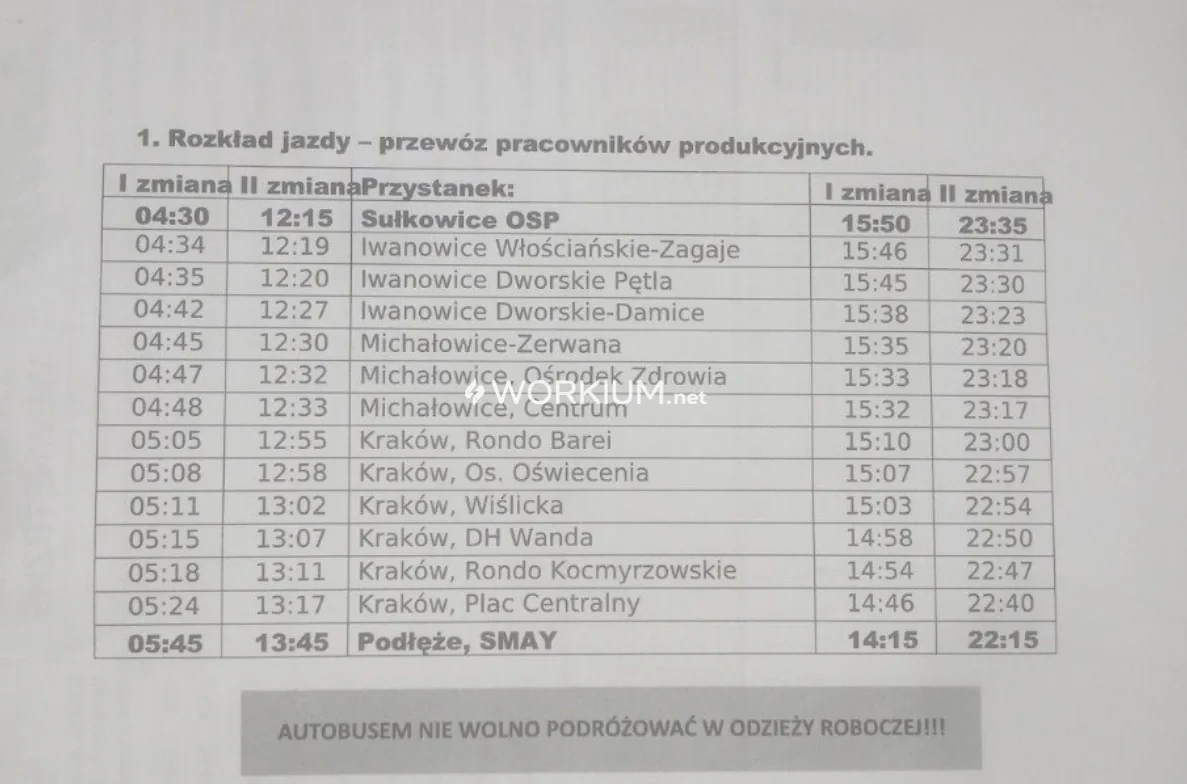
Before signing the agreement, check the route for the actual shift start and finish times. Daytime public transport may be convenient, but an early, late, or night shift may require employer-provided transport or a private car. Clarify the stop address, the first and last service times, and whether organised transport is paid for.
Do not rely only on the label «Kielce» in the advertisement: the workplace may be in an industrial part of the city or outside it. In many manufacturing positions, understanding basic commands in Polish may be sufficient, but requirements are usually higher for work involving customers, drawings, or technical documentation.
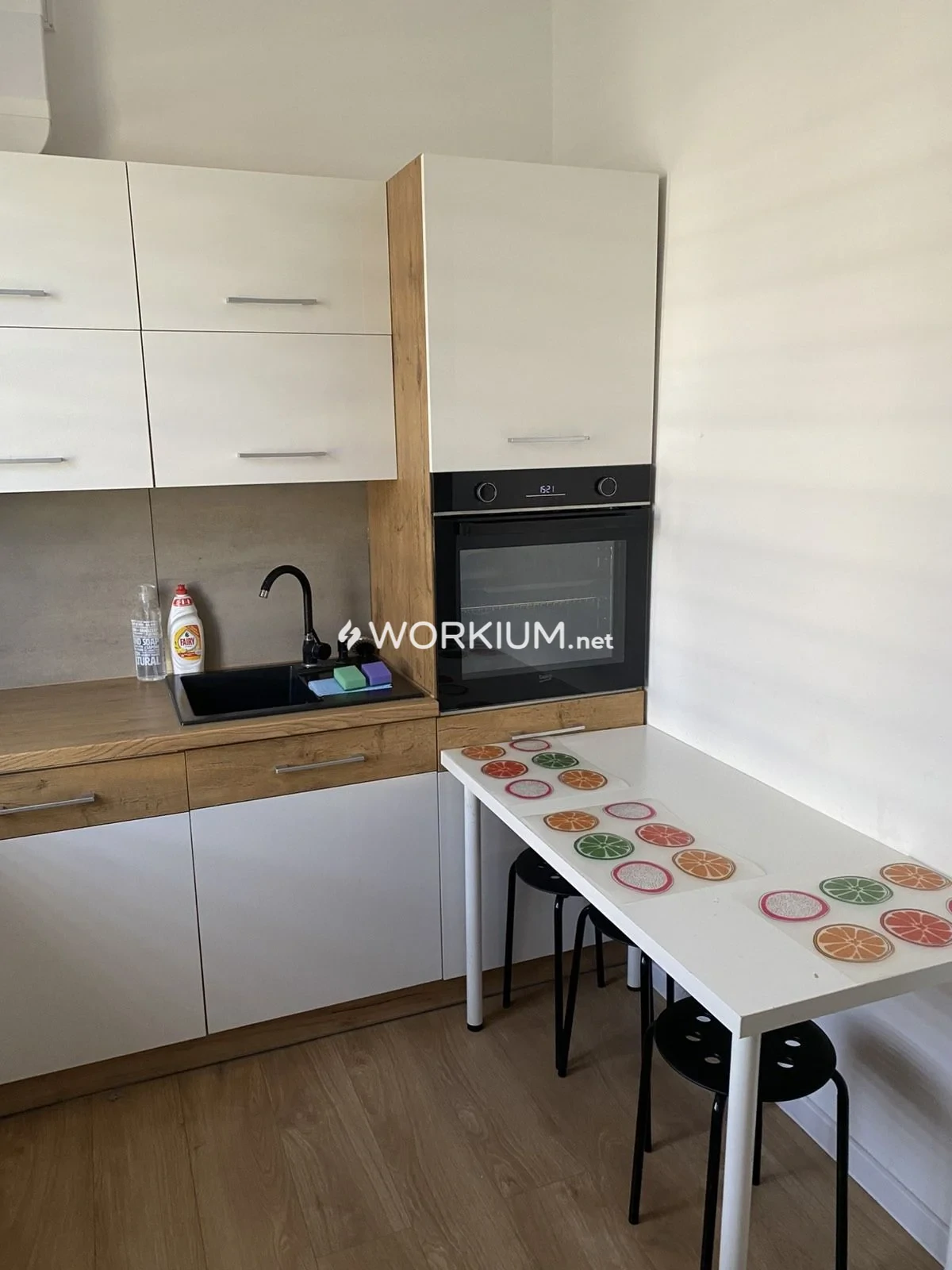
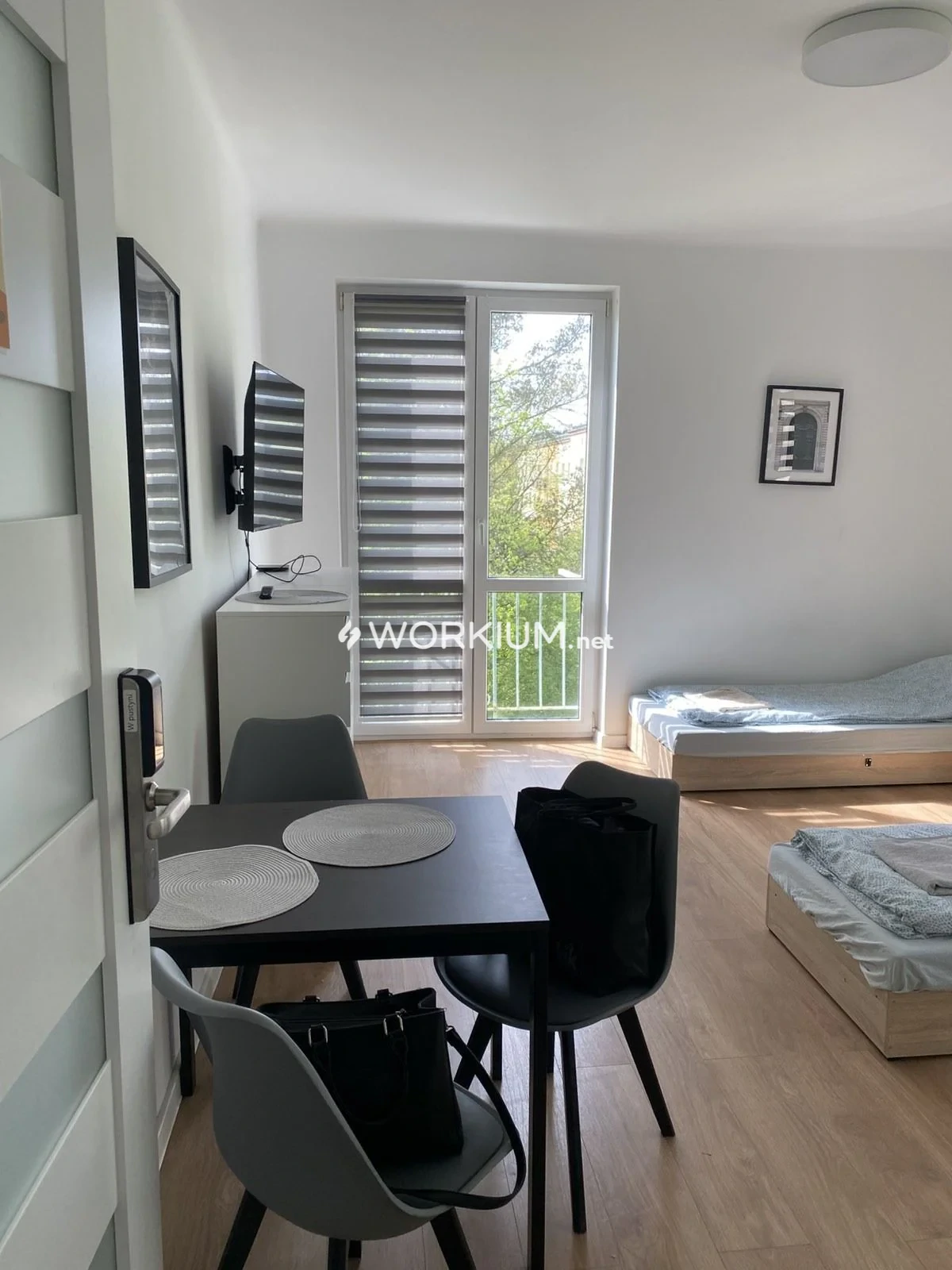
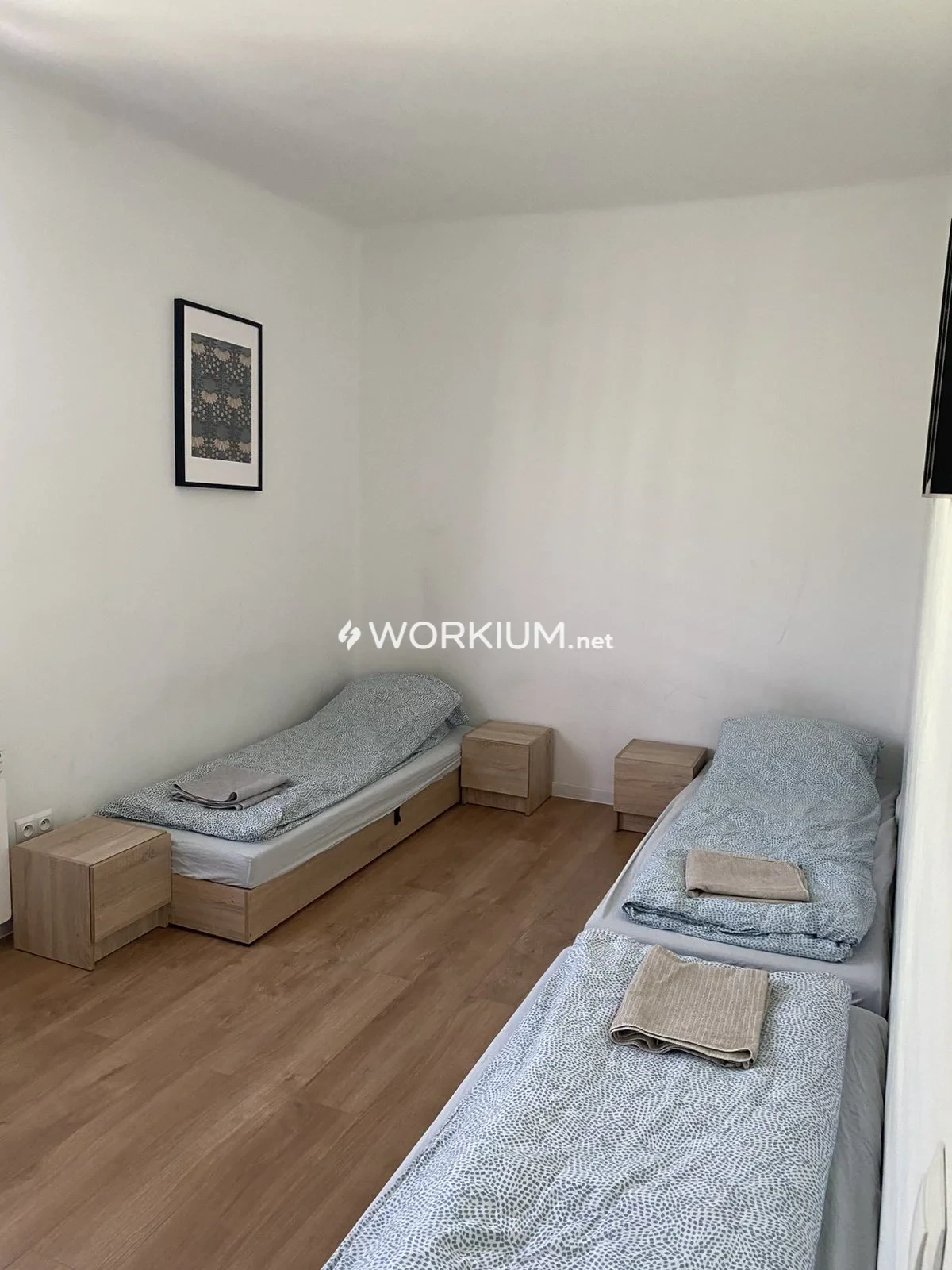
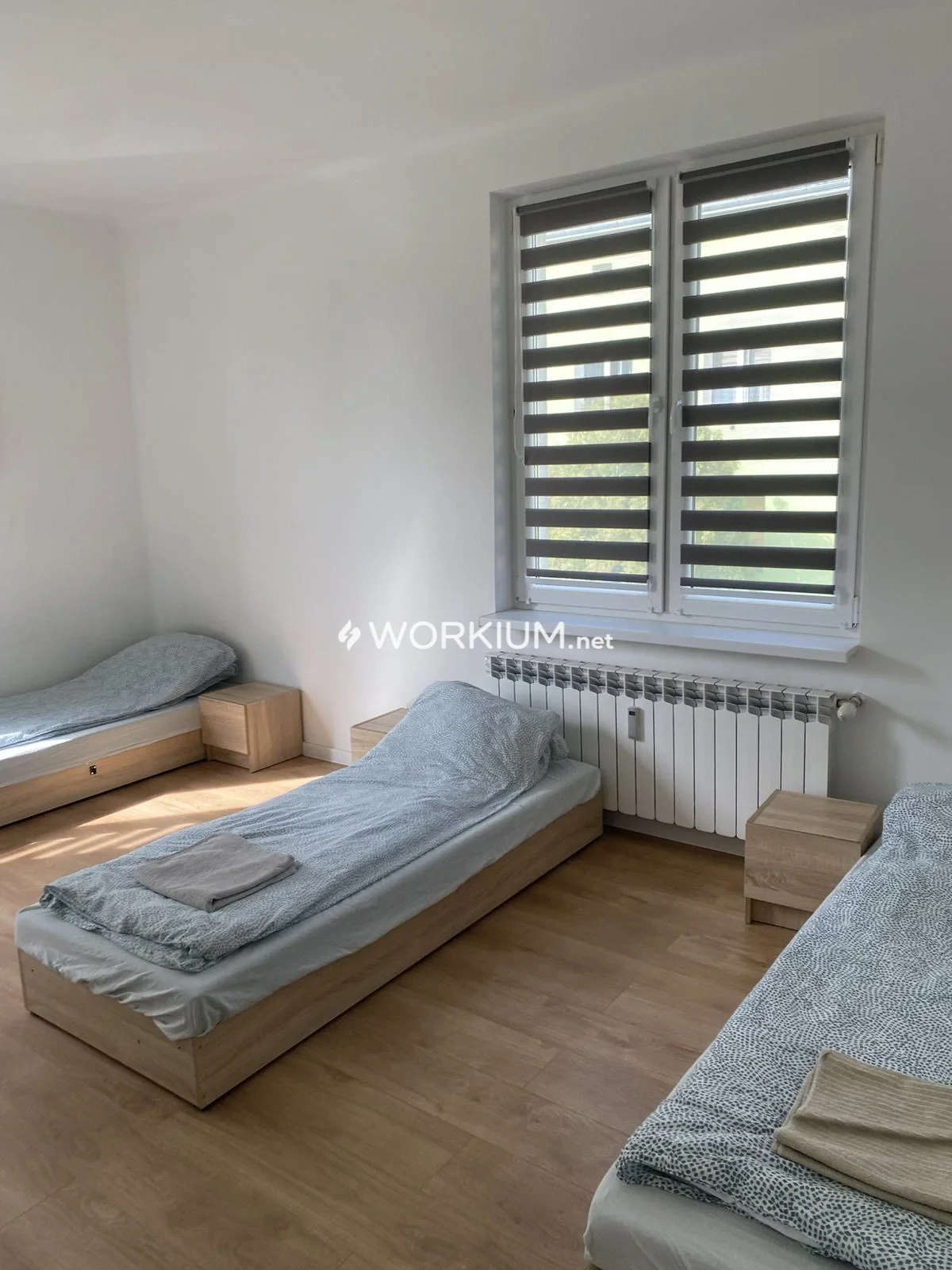
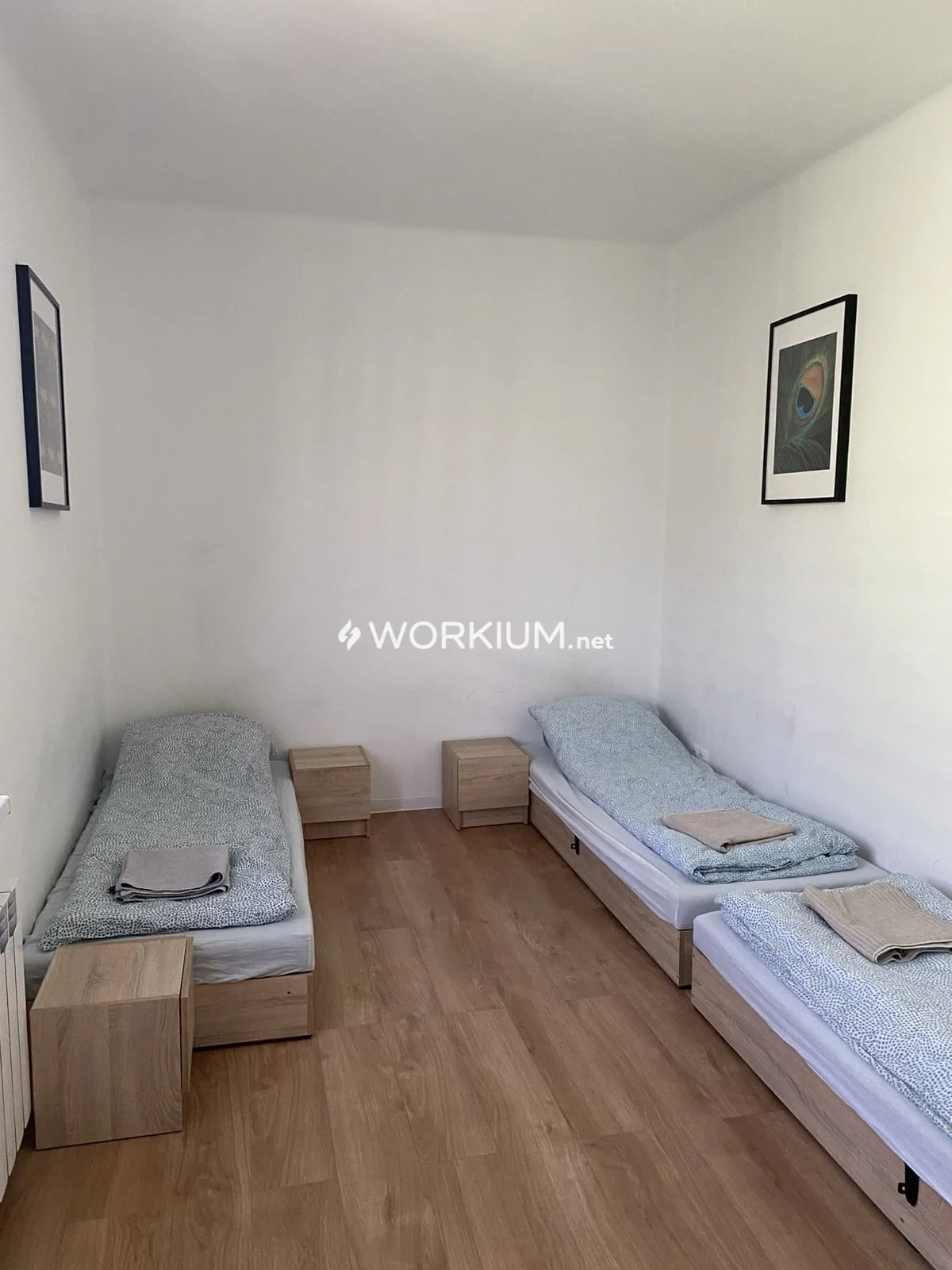
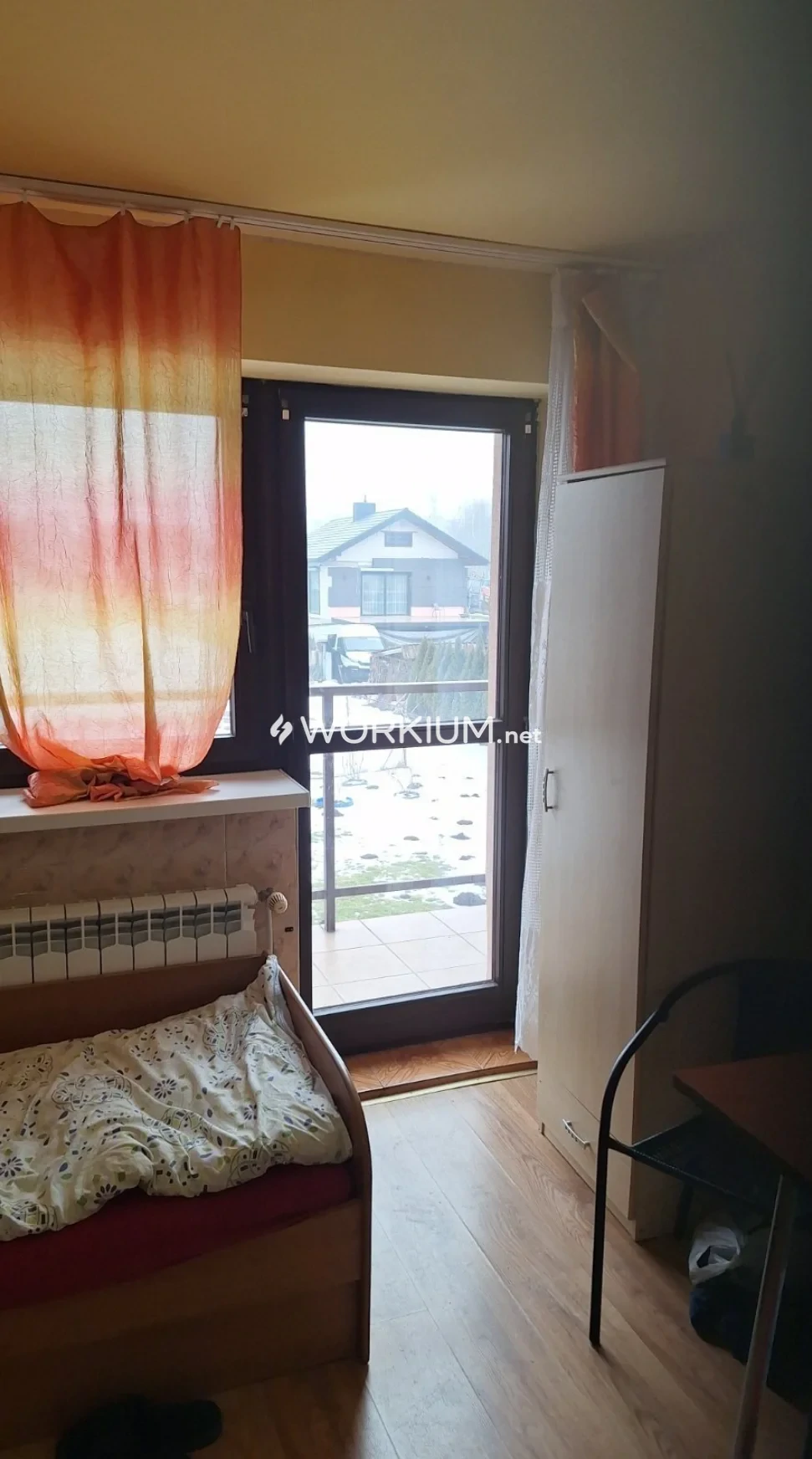
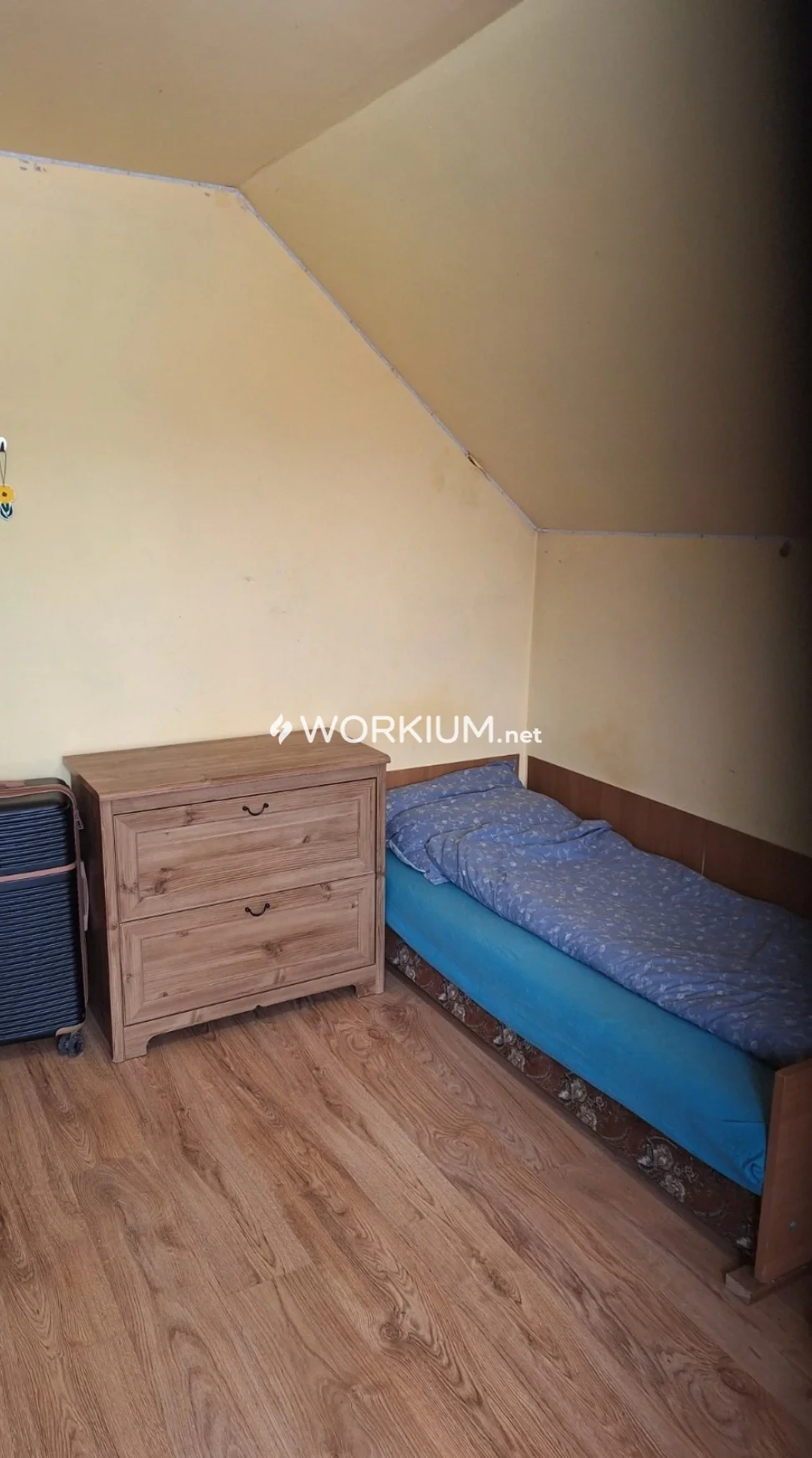
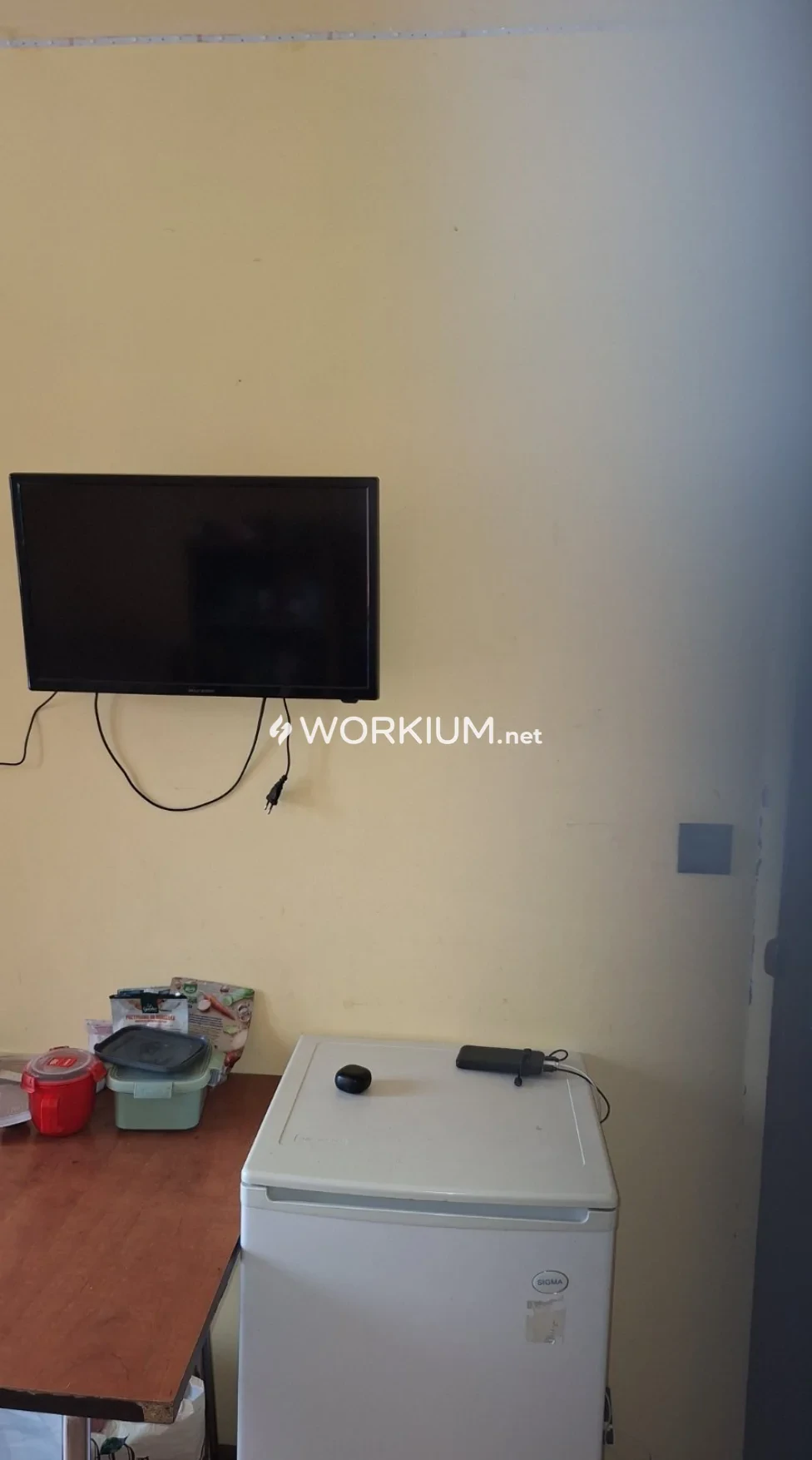
If the employer arranges accommodation, find out the exact address, monthly fee, deposit, utility costs, number of people in the room, and transport to work. If accommodation is important to you, review work in Poland with accommodation.
How to check a job offer
Start with five points: who will be the employer under the agreement, the address, duties, rate, and guaranteed hours. Then check the schedule, supplements, accommodation, transport, and all deductions.
If the vacancy is advertised by an agency, request its full name and find out which company will be a party to the agreement. Do not pay solely for a promise of a position, a «reservation», a test, or documents without a clear written basis.
For welding, electrical work, equipment operation, or work at height, ask for written confirmation of which certificates are accepted. Do not begin an operation without the required authorisation or safety instructions.
Visit the WORKIUM vacancy catalogue to check current offers and application conditions.
For particular candidate groups, pages are available for work in Poland for women, work in Poland for men, and vacancies for couples.
Frequently Asked Questions
What professions are common in Kielce?
The main sectors include manufacturing, metalworking, mechanical engineering, construction, warehousing, transport, logistics, the exhibition industry, and the service sector. The specific range of vacancies depends on current employers.
Are there jobs that do not require experience?
Such positions may be available in packing, warehousing, simple production operations, cleaning, or event support. Check whether training is provided and review the physical requirements.
What is the minimum pay in Poland in 2026?
From 1 January 2026, the minimum pay is PLN 4,806 gross per month under an employment contract and PLN 31.40 gross per hour for certain civil law contracts.
Is Polish required?
Not for every position, but workers must be able to understand safety training and workplace instructions. Language requirements may be higher for technical roles or customer-facing positions. Confirm in advance which language is used for safety training and for explaining daily tasks.
Are all jobs located within Kielce itself?
No. Construction, installation, and logistics positions may involve work in the surrounding area or business travel. Obtain the exact workplace address before signing the contract.
What should you check before applying?
Check the employer, workplace address, job duties, contract type, gross or net pay rate, guaranteed working hours, qualification requirements, and any deductions.